 E-mail: sales1@rlbcable.com
 English
 العربية
 Le français






Cable Bunching Machine FAT Checklist: What Buyers Must Test Before Shipment
 Sep 21, 2026|
 View:6
A Factory Acceptance Test (FAT) for a cable bunching machine is a full check before shipment. It includes visual inspection, functional testing, performance verification, and documentation review. You need a practical checklist to know exactly what to test and how to prepare. This step prevents costly defects after shipment. A strict FAT protects your investment. It confirms the machine meets contract specifications and production requirements. Without this step, you risk getting equipment that fails on your production floor. You catch problems early and save money on returns, downtime, and delays. Hold your supplier accountable with a thorough evaluation. Never accept shipment without a completed FAT.
Key Takeaways
A Factory Acceptance Test (FAT) catches machine defects before shipping. It saves money and avoids delays.
Test the machine while it is off: check the size, materials, and safety guards. Test it while it is on: check the tension, speed, and alarms.
Get ready before the FAT. Gather your papers, set the rules for pass or fail, and choose to watch in person or from a distance.
Never let the machine ship without a signed FAT report. The report must say 'Accepted' or 'Conditionally Accepted' and show that all issues are fixed.
What Is a Cable Bunching Machine FAT?
Defining the Factory Acceptance Test
A Factory Acceptance Test (FAT) is a check done before shipping. You run this test on the cable bunching machine before it leaves the supplier's factory. The test checks the machine against your contract specifications and approved drawings. It is not the same as routine factory testing. Routine tests follow product standards during production. A FAT focuses on your specific order.
Pre-shipment inspection works best when it checks a specification both sides agreed on earlier. It also identifies the units being shipped and completes the evidence package before release. This shows that FAT differs from routine factory testing because it focuses on verifying the agreement for your specific order.
A FAT is different from other inspection types. Here is how it compares:
Factory testing is the basic quality control during production. A FAT adds confidence for your specific order beyond that basic level.
Third-party inspection gives independent verification when you cannot attend the FAT. A FAT is usually watched by you or your representative.
Independent laboratory testing handles special checks like performance disputes. A FAT focuses on verifying your specific order before shipment.
During the FAT, you verify many parts of the machine. You check dimensions, orientation, and nozzle locations against approved drawings. You confirm materials and finishes match specifications. You inspect equipment identity, mechanical assembly, structural construction, and power transmission. You test electrical control systems, hydraulic behavior, vibration levels, and safety functions. You also verify roll width, roll diameter, meter length, core position, edge quality, and finished roll tightness. Each of these items must match your order specifications exactly.
Why the FAT Matters for Buyers
The FAT protects your investment. It catches defects before the machine ships. This avoids costly returns, downtime, and production delays. A FAT gives you confidence that the machine will work on your production floor.
Each FAT step lowers the risk of non-compliance with your specifications. Here is how:
FAT Step | How It Reduces Risk of Non-Compliance |
|---|---|
Before FAT scheduling | Requires readiness evidence from the supplier. This ensures the test runs on the exact ordered equipment, not an incomplete or wrong unit. |
Documents request | Ensures all purchase specs, drawings, and acceptance criteria are ready before the test. This gives an objective baseline for checking compliance. |
Functional test witnessing | Requires witnessed tests with recorded measured values, not just pass/fail results. Performance and functions must match the agreed procedure and spec. |
Non-conformity handling | Requires formal documentation, severity classification, and corrective-action evidence. This prevents verbal fixes or hidden issues that could cause non-compliance later. |
Release or hold decision | Makes the release decision depend on closure of critical and major non-conformities. Shipment only happens when your specifications are clearly met. |
During a FAT, you run critical tests that confirm the machine meets your production needs. You load production-representative bobbins. You thread the actual cable elements. You set individual tension values. You confirm back-twist settings where required. You run the machine at low speed and measure lay length. You increase to target speed and observe cable-core orientation. You check tension stability. You measure finished diameter. You test acceleration and deceleration. You inspect the cable surface. You check reel winding. You verify alarms and safety functions. You repeat measurements near the end of the production run. You also run the machine dry at full rated RPM to confirm vibration amplitude and noise stay within engineering tolerances.
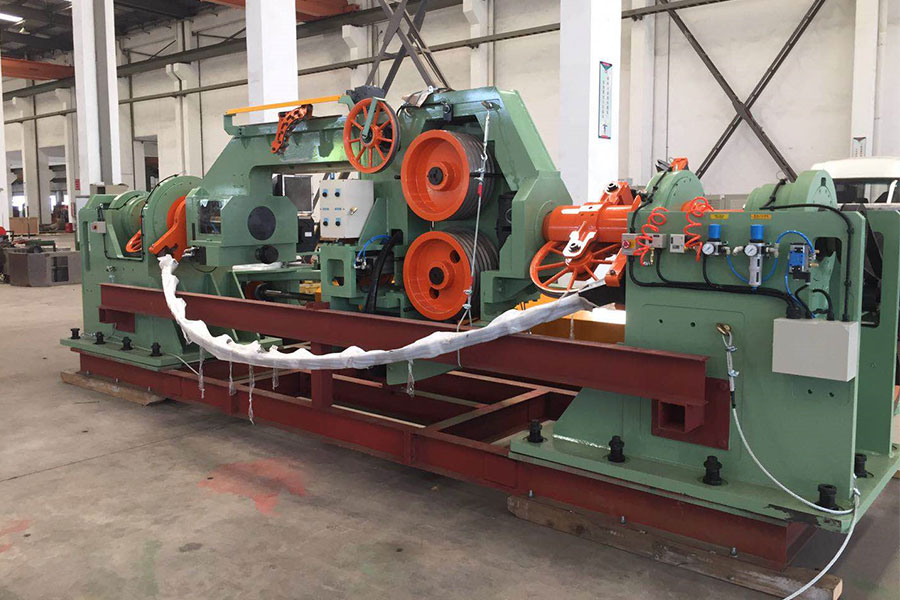
These steps ensure the machine performs exactly as you specified. Without a FAT, you risk receiving equipment with hidden defects. You might face loose tension control, misaligned wire guiding, or inconsistent bunching speed. A thorough FAT prevents these problems.
A rigorous FAT builds trust between you and your supplier. It confirms the machine meets your requirements before shipment. Never accept shipment without a completed FAT.
Cable Bunching Machine FAT Checklist
Visual, Structural, and Static Checks
Start your check with the machine turned off. Make sure the size, position, and nozzle places match the approved drawings. Measure important gaps and mounting spots. Confirm that the materials and finishes meet the specs. Check that the equipment ID matches the purchase order. Look at the mechanical build for correct fit and alignment. Check the frame for good welds and strength. Inspect parts like belts, pulleys, and gearboxes to see they are installed right.
Walk around the whole cable bunching machine and write down every difference. Take photos of anything that does not match the approved drawings. Check that all guards and covers fit well. Make sure oil points are easy to reach. Confirm the nameplate data matches your order. These static checks catch build mistakes before the machine runs.
Dynamic and Functional Performance Tests
Run the machine with power to see how it really works. Test tension control first. Tension sensors measure the real force from the process, not just indirect machine settings. Rotating telemetry lets you check tension directly on spinning parts like stranders and bunchers. This gives real tension data from the rotating process.
Follow these steps to check tension:
Do dynamic tension testing with a calibrated handheld tensiometer at every pay-off position while the line is running.
Calibrate the electronic tension load cells or dancer position sensors in both the pay-off and take-up zones.
Next, check wire guiding accuracy and bunching speed steadiness. Look at these areas:
Speed stability testing to see that bunching speed stays the same over time.
Tension uniformity control to make sure wire tension is even across all strands, which affects guiding accuracy.
Stranding precision verification to confirm that wire placement and alignment are correct.
Operational stability inspection to check overall machine behavior under load.
You also need to run a test twist. Check twist pitch accuracy to get a steady lay length. Look at running vibration to find mechanical problems that hurt accuracy and speed steadiness. Check tension control performance to keep wire tension stable. Examine finished conductor quality as a final check of both guiding and speed steadiness.
To get a steady lay length, the machine needs exact timing of flyer and capstan speeds using PLC systems with high-quality encoders. Regular calibration of speed sensors and motor controllers matters. To lower vibration, look for lightweight carbon fiber bows, dynamic balancing, vibration-damping mounts, and precision bearings.
Test electrical safety functions, hydraulic behavior, and all safety interlocks. Run the machine without material at full rated RPM to make sure vibration and noise stay within engineering limits. Do a water test where the seller starts the equipment and shows full function. Finish processing function tests with materials that match production.
Check roll-specific items last. Verify roll width, roll diameter, meter length, core position, edge quality, and finished roll tightness. Each measurement must match your specs. Write down every reading and compare it to the acceptance criteria in your contract.
Getting Ready for the FAT and Common Problems
What Buyers Must Prepare
Make sure the supplier is ready before you travel. Ask for proof of readiness. Look over the purchase order and approved specifications. Make a detailed checklist with pass/fail rules. Plan your travel or remote watching.
Collect these documents before the test: ISO certificates, CE marks, and test reports. Check the Functional Requirements Document. This sets performance rules and belongs in the contract package. Review all project drawings, including interface drawings from other vendors. Confirm all design approvals are done before the FAT.
You should also set the product range for testing. Pick the thinnest single wire, the biggest conductor, the shortest lay, and the longest lay. Include the highest strand count and the material most sensitive to stretch. Test the highest line speed required and the largest take-up reel. Add the insulated core most likely to get surface marks.
Get questions ready for the supplier. Ask which product limits the machine range. Ask how lay length is kept in sync. Ask how wire tension is adjusted. Ask what happens as the take-up reel gets heavier. Ask how vibration and bow balance are controlled. Ask which guides touch the wire. Ask how fast the bobbin can be swapped.
Common Defects and How to Detect Them
Watch for loose tension control during the dynamic test. Check tension sensors at every pay-off position. Look for wire guiding that is out of line. Inspect the conductor for loose or crossed strands. Find uneven bunching speed by recording bow speed and line speed. Measure lay length at several reel positions.
Electrical safety gaps show up during interlock testing. Test wire-break detection and all safety functions. Vibration issues appear during the dry run at full rated RPM. Poor roll tightness shows up during the roll-specific checks. Verify roll width, roll diameter, meter length, core position, edge quality, and finished roll tightness.
Use your checklist for every test. Ask for live demos of each function. Write down every deviation with photos and notes. This cable bunching machine evaluation protects your investment.
Cable Bunching Machine FAT vs. SAT and Required Documents
Key Differences Between FAT and SAT
A FAT takes place at the maker's factory before the machine ships. A Site Acceptance Test (SAT) happens at your site after you install it. The FAT checks build quality and basic operation. The SAT checks how the machine works with your other equipment and if it is ready for production. You go to the FAT to make sure the machine matches what you ordered. You run the SAT to make sure the machine works in your real production setup.
Both tests are important, but they do different jobs. The FAT finds build mistakes early. The SAT finds setup and connection problems. You need both to fully protect your investment.
Documents Buyers Must Review
Before you give the green light, gather and check every key document. You need approved drawings, the purchase order, and specs. Ask for test reports, calibration certificates, and electrical and safety test records. The signed FAT report is the most important document. It must have certain sections to be complete.
Section | Description |
|---|---|
Cover Page | Project ID, equipment tag, purchase order reference, test date, parties, and witness signatures. |
Scope and Purpose | What the FAT covers and its goals. |
Reference Documents | All drawings and standards used during testing. |
Pre-Test Checklist | Confirms calibration and material are ready before tests. |
Safety Inspections | Emergency stops, guards, and interlocks. |
Functional Tests | Results for each test with pass/fail rules. |
Performance Tests | Number-based measurements against contract specs. |
Punch List | Open items with how bad, who fixes it, and when. |
Acceptance Statement | Final result signed by both sides. |
Appendices | Calibration records, test data, and photos. |
The acceptance statement must say one of three results. Look at this table to see what each result means for your shipment.
Outcome | Meaning | Next Step |
|---|---|---|
Accepted | All functional tests pass and no critical issues are open. | Equipment is approved for shipment. |
Conditionally Accepted | Minor issues are open but no critical failures exist. | Maker fixes items before shipment; you confirm they are closed. |
Not Accepted | A critical test fails or safety checks are not met. | Maker fixes problems; a re-test is needed. |
Never let a cable bunching machine ship without a signed FAT report that says "Accepted" or "Conditionally Accepted" with closed items.
Why Choose RLB as Your Cable Bunching Machine Supplier
RLB's Quality Assurance and FAT Support
Jiangsu Reliable Industry Co., Ltd. (RLB) makes a full Insulation and Sheath Extrusion Production Line portfolio for cable makers. This portfolio has the 16 & 24 High Speed Braiding Machine, the Three-layer Co-extrusion Dry Cross-linking Production Line, and the Continuous Lead Extruding Line. Every machine goes through strict quality checks before it leaves the factory. RLB sees the FAT as a key part of delivery, not just a final formality.
RLB helps your FAT with clear documents and hands-on support. The company gives you approved drawings, test reports, calibration certificates, and electrical safety records before the test date. RLB runs live demos of tension control, wire guiding, bunching speed, and safety interlocks. You watch every performance test with materials that match production. The RLB team writes down each measured value and compares it to your contract specs. If something is off, RLB records it, rates how bad it is, and fixes it before shipment. This way, you get clear proof that your Cable Bunching Machine meets your order requirements.
Trust in Overseas Cable Machinery Transactions
Buying equipment from overseas carries real risk. You cannot easily visit the factory after shipment. A strict FAT process removes much of that risk. RLB invites you or your rep to watch the test at the factory. You see the machine run at full rated speed. You check vibration, noise, and roll tightness with your own eyes. You review the signed FAT report before you approve shipment.
RLB's commitment to thorough testing builds trust across borders. The company offers remote watching options when travel is not possible. RLB also shares a complete document package, including the signed FAT report with an acceptance statement. This openness protects your investment and lowers the chance of costly surprises at your site. When you work with RLB, you get a supplier who treats your FAT as a shared quality gate. That partnership lowers your risk and confirms the machine is ready for your production floor.
A complete FAT is your best way to lower risk before a Cable Bunching Machine leaves the factory. You must ask for a full checklist that covers visual inspection, functional testing, performance verification, and documentation review. Each step finds defects early and protects your investment.
Work with suppliers who support open, strict FAT processes. Jiangsu Reliable Industry Co., Ltd. (RLB) invites you to watch every test at the factory. You review signed reports before you approve shipment. Never accept shipment without a completed FAT. This simple step stops costly surprises on your production floor.
FAQ
What is the main goal of a cable bunching machine FAT?
You want proof that the machine matches your contract before it ships. The test checks dimensions, materials, tension control, wire guiding, bunching speed, safety functions, and roll quality. You catch defects early and avoid costly returns, downtime, and production delays.
How long does a typical FAT take?
The time it takes depends on your machine setup and what you plan to test. A basic check may take one day. A full test with production materials, speed runs, and roll checks can take several days. Ask your supplier for a schedule before you travel.
Can I witness the FAT remotely?
Yes. Many suppliers let you watch from far away when you cannot travel. You join live video calls and watch each test as it happens. Ask for recorded video and measured values. Make sure the supplier shows the exact unit tied to your purchase order.
What happens if the machine fails a critical test?
The supplier must fix the problem and set up a re-test. You do not approve shipment. The FAT report records the failure, the fix, and the new result. Shipment only happens after the machine passes all critical checks.
Do I need a FAT if I already paid a deposit?
Yes. A deposit does not replace a FAT. The test confirms the machine meets your specs before final payment and shipment. Skipping this step leaves you open to hidden defects. Always insist on a completed FAT report before you release the balance.
I want to comment
Recommended Products
Recent News
1.Why Smart Bunching Machine Choice Supercharges Flexible Cable Production
2026-08-112.Cable Bunching Machine FAT Checklist: What Buyers Must Test Before Shipment
2026-09-213.Working principle of automatic bunching machine
2021-05-134.1250 Double Twist Bunching Machine
2021-06-075.Bunching Machine
2021-07-096.Bunching Machine
2024-12-16





View More(Total0)Comment lists