 E-mail: sales1@rlbcable.com
 English
 العربية
 Le français






How to Build a Connected Wire & Cable Production Line Without Downtime: From Bunching to Extrusion
 Oct 14, 2026|
 View:11
You can build a connected wire & cable production line without downtime. This goal needs unified data flow, synchronized drives, predictive maintenance, and trained operators from bunching through extrusion. A double twist bunching machine that runs well matters little if the extruder downstream cannot match its pace.
Zero downtime is a system-wide result. It is not a single-machine upgrade. You need every stage of wire and cable production to work as one connected unit. This article gives you a step-by-step roadmap. You will learn how to assess equipment, add connectivity, integrate machines, automate handling, and improve with analytics. Each layer builds on the last.
Key Takeaways
Look at each machine from bunching to extrusion to find weak spots.
Add real-time sensors and a central data platform so you can spot problems early.
Match the bunching and extrusion speeds to keep production flowing.
Use machines to move materials and switch jobs on their own to cut down on idle time.
Teach operators and use data analytics to find and fix the main causes.
Assess Equipment Before You Build a Connected Wire & Cable Production Line
Your first step is a full check of every machine in the line. You must map conductor drawing and annealing, bunching, extrusion, cooling, and coiling as one chain. Each stage depends on the one before it. A weak link anywhere will slow down your whole wire and cable production.
Map Machines from Bunching to Extrusion
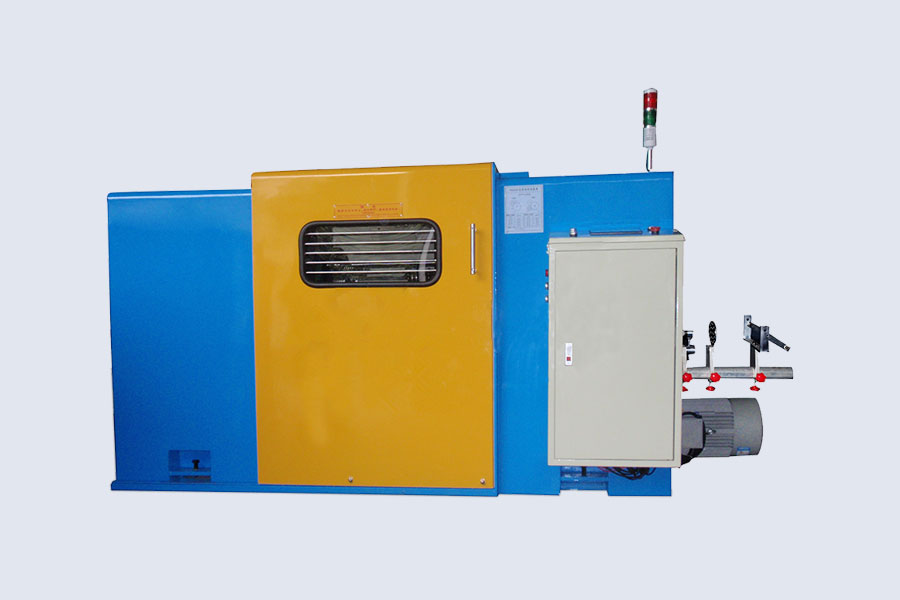
Walk the floor and write down every asset. Note the age, control type, and communication ability of each unit. A double twist bunching machine from 2005 may run well, but it may not have the data ports you need for connectivity. You should also check the mechanical condition of capstans, guides, and haul-offs.
RLB brings over 20 years of experience and more than 88 happy clients to this work. That history shows how a strong equipment baseline supports long-term uptime. A high-speed double twist buncher for communication cables, for example, gives you a steady foundation for later integration. The same idea applies to every cable bunching machine and bunching & stranding machine on your line.
Identify Top Downtime Causes
Log every stop by machine, shift, and cause. This record shows patterns you cannot see otherwise. You should track both mechanical failures and process drift. Common root causes include gradual wear of drawing machine capstans and wire guides, extruder screw and barrel degradation, and mechanical inconsistencies in cooling troughs and caterpillar haul-offs.
Root Cause | Description |
|---|---|
Gradual wear of drawing machine capstans and wire guides | These parts wear down over time, causing process drift and eventual breakdown. |
Extruder screw and barrel degradation | Wears down over time, first showing as process drift before causing dimensional failures. |
Cooling trough and caterpillar haul-off mechanical inconsistencies | Develop mechanical inconsistencies that turn directly into line speed changes and product quality issues. |
Data silo structure | Downtime events are recorded in broad categories that do not support failure pattern analysis or predictive maintenance. |
Lack of continuous machine signal capture | OEE calculations rely on end-of-shift manual data entry instead of continuous machine signal capture, making them retrospective and often wrong. |
Poor synchronization between bunching, extrusion, and winding is a leading cause of unplanned downtime. A high-speed double twist buncher may run at full speed while the extruder falls behind. The double twist mechanism itself is rarely the problem. The mismatch between stages is. In wire and cable manufacturing, this gap costs you hours. You should also review process-related causes. Wrong temperature settings cause blistering or rough surfaces. Die swell affects dimensions. Wall thickness variations, material inconsistency, and poor cooling or tension control all lead to breakage. Speed and temperature imbalance, screw and crosshead design issues, and lack of routine maintenance and calibration add to the list. A wire and cable plant that tracks these causes can fix them at the source. That is how you reduce downtime in cable manufacturing.
Add Real-Time Process Monitoring and Data Acquisition
Real-time process monitoring tracks line speed, tension, temperature, and output. This data is the backbone of a connected line. You cannot control what you cannot see. A high-speed double twist buncher may run at full speed, but without live data you will not know when tension drifts or the extrusion line falls out of sync. Real-time process monitoring helps you see problems and act before a stop happens.
Choose Compatible Sensors and PLCs
Before you make any network connection, verify hardware compatibility. A PLC needs a built-in Ethernet port or a firmware-compatible communication module. Legacy PLCs with only serial ports (RS-232/RS-485) or proprietary connectors cannot connect to Ethernet-based MES or IIoT platforms directly. They need a protocol gateway or converter to change native serial communication into Ethernet formats like Modbus TCP. In mixed-protocol or legacy environments, document the existing network topology first. Unplanned changes are the top cause of integration failures. You should also segment OT and IT networks via VLANs or a dedicated firewall. These networks have different uptime, security, and traffic requirements.
Protocol | Layer / Group | Role in Data Integration |
|---|---|---|
IO-Link | Device Level | Point-to-point sensor/actuator communication; smart sensors with parameterization and diagnostics |
OPC UA | Higher-Level / IT Integration | Platform-independent communication enabling PLC to SCADA to MES to IT/Cloud data integration |
MQTT | Higher-Level / IT Integration | Lightweight publish/subscribe protocol for PLC/edge devices to Cloud/IIoT |
Modbus RTU / PROFIBUS DP / CANopen | Fieldbus / Serial | Legacy fieldbus and serial protocols commonly found on older wire and cable equipment |
PROFINET / EtherNet/IP / EtherCAT / Modbus TCP | Industrial Ethernet | Modern industrial Ethernet protocols used for PLC-to-network connectivity |
Centralize Data in One Platform
A Plug & Play MES, OEE, and IIoT platform turns shop-floor data into useful insights. Reuse your existing controls. Most machines installed in the last 15 years already have PLCs. You can read their data without changes using OPC-UA, Modbus, or MQTT. Older machines can use edge gateways on current I/O or added sensors like vibration, current, or optical sensors to track run state. Roll out in phases. Start with PLC and sensor telemetry on top machines. Then add MES operator terminals, barcode or material tracking, and finally AI vision and analytics. This approach gives quick wins and proves ROI before you scale up centrally.
For real-time IIoT connections, encrypt MQTT traffic with TLS. Enable broker authentication and topic-level access controls. Build a hierarchical namespace like site/line/machine/tag. That way data can be filtered, managed, and scaled. Include tag descriptions, units, and timestamps in MQTT messages. Then the platform can put the data in context. MQTT can also be the transport layer for a Unified Namespace. This gives one source of shop-floor data across MES, ERP, and cloud systems.
RLB's machinery, like its high-speed stranding machine and cable bunching machine, goes through full factory acceptance testing for reliable data integration. This testing ensures your process monitoring and quality traceability solution starts with clean, trustworthy data. Energy-efficient motors and drives help keep speeds in sync while lowering operating costs. A wire and cable plant that centralizes data this way gets end-to-end lot traceability from bunching through extrusion. That traceability supports faster root-cause analysis and fewer unplanned stops in wire and cable manufacturing.
Integrate Bunching and Extrusion for Continuous Flow
Synchronize Double Twist Bunching Machine and Extruder
A high-speed double twist buncher for communication cables with built-in tension control keeps stranded conductors even before they reach the extruder. This evenness matters for every step that follows. When you build a connected wire & cable production line, the double twist bunching machine and the extruder must work as one unit.
Advanced tension control systems on high-speed double twist bunchers give you several benefits:
Equal strand spread makes a steady conductor cross-section before insulation extrusion.
Steady tension stops internal stresses that cause bending during downstream processing.
The right tension keeps the conductor round and stable in size.
Even strand placement helps electrical performance stay the same.
Low tension makes strands loose or bird-caged, which hurts conductor evenness.
High tension stretches or snaps single wires, causing flaws and production losses.
Motorized pay-offs control unwinding speed for each strand. Load cells on the take-up spool send feedback for closed-loop adjustment. Servo motors and light carbon fiber bows boost response at high speed. You should calibrate tension sensors often and guide the wire path with smooth guides.
Coordinated multi-drive systems and dancer feedback loops steady tension and line speed from bunching through extrusion. The double twist mechanism works best when the extruder keeps its pace. A mismatch here stops your extrusion line. For communication cable production, this timing is critical.
Apply Predictive Maintenance and Quality Control
Smart extruders with real-time temperature, pressure, and speed monitoring help with predictive maintenance. High-frequency data capture of extrusion speed and multi-point temperature builds the base for early warnings. You can plan fixes before downtime happens.
Parameter | Threshold / capability | Predictive-maintenance value |
|---|---|---|
Barrel zone temperature | Held within ±1°C of setpoint | Deviation shows heater or controller instability |
Die zone temperature uniformity | Within ±2°C across die | Poor uniformity predicts concentricity problems and die wear |
Startup temperature overshoot | <3°C with modern model-predictive control | Larger overshoot harms compound and shows tuning faults |
Melt pressure drift | >5% over 30 minutes | Leads to a check of screw or barrel wear |
Wear warning horizon | 200–400 hours via vibration and current trending | Lets maintenance happen before output turns unstable |
Inline spark-test line speed | Up to 1,000 m/min | Supports continuous defect detection at full speed |
Automated quality control with online measurement after extrusion catches flaws before coiling. Welded splices should be marked and cut out after insulation. Automated line tracking can remove them without stopping the line. This traceability helps find root causes faster.
RLB's extrusion production lines and high-speed electrolytic tin plating machines serve as reliable integration-ready equipment. These machines support the bunching process and cable manufacturing with steady performance. A wire and cable plant that integrates these systems gets real-time process monitoring across the full line. The bunching of wires and extrusion then work together without interruption.
Automate Material Handling and Changeovers
Moving materials by hand creates idle time at every stage of your line. Automate payoff, take-up, and conductor feeding to cut this waste. With these systems, your double twist bunching machine keeps running while operators get the next spool ready.
Use Automatic Payoff and Take-Up Systems
Automatic payoff systems supply conductor to your cable bunching machine without stopping. Motorized payoffs match line speed and keep tension steady. This cuts manual work and keeps your high-speed double twist buncher at peak output.
Automatic take-up systems wind the finished product onto spools with even tension. They change spools without any operator help. You get fewer stops and less wasted material. These systems also guard product quality during the final stage of wire and cable manufacturing.
Speed Up Changeovers with Quick-Release Tooling
Quick-release tooling and standard fixtures shorten changeover time between runs. Modular fixtures use standard base plates, locator pins, and clamp parts. They allow fast setup for different parts or small batches. Quick-change pins let workers swap locating parts quickly without tools. Color-coded locator sets reduce setup errors and search time. Mistake-proofing features, such as dowel pins that fit only correct positions, prevent wrong setups that cause scrap and rework.
Quick-Release Tooling / Fixture Design | How It Reduces Changeover Time |
|---|---|
Modular fixtures (standard base plates, locator pins, clamp components) | Allow fast reconfiguration for different parts or small batches, cutting changeover time and per-part tooling cost |
Quick-change pins | Enable fast, tool-free swapping of locating elements between production runs |
Color-coded locator sets | Reduce setup errors and search time when selecting the correct locator for a run |
Mistake-proofing (dowel pins fitting only correct positions, labeled clamp sequences, sensors confirming correct locator set) | Prevent wrong setups that cause scrap and rework, avoiding costly changeover mistakes |
Standard work formats put assembly steps in the most logical order. This standard sequencing cut assembly batching and supported one-piece flow in recorded cases. Digital pictures helped employees do their jobs more easily and accurately.
The next time the part number was assembled, Line J's results were shocking. The assembly was better than expected. Due to documentation and standard procedures, the cell could be configured in less than half the original time, thus making the entire assembly process more efficient.
RLB provides auxiliary equipment, test equipment, recycling machines, and spare parts for a fully automated line. These parts keep your bunching and extrusion line running without manual delays. A high-speed double twist buncher setup paired with automatic handling gives you the continuous flow your extrusion process needs.
Train Operators and Improve with Analytics
Operators can make a connected line succeed or fail. Standard steps and cross-training cut down on human mistakes and help teams react faster to line problems. When you know the whole process flow, small tension changes show up early. That knowledge stops downtime in wire and cable manufacturing.
Standardize Procedures and Cross-Train Staff
Standard operating procedures give every operator the same best practices. This consistency cuts down on errors during changeovers.
Set standard steps so operators follow the same best practices every time.
Give hands-on training on quick setups, adjustments, and troubleshooting.
Redesign workflows to remove steps you do not need and make transitions smoother.
Vendors help with this work by providing easy-to-read documents and step-by-step guidance built into the human-machine interface. That guidance helps workers with less experience do changeovers the right way. Cross-train staff across line stages. Then your team can spot process drift before it stops the line.
Use OEE Data to Drive Uptime Gains
Connected intelligence lets plants trace defects back to the exact process step. OEE quality (%Q) is the ratio of good output to total output. Track first-time-right production instead of counts that include rework. If you include rework, the true source of defects stays hidden. Do not focus only on the final OEE number; use it to find root causes. A good OEE program answers which process step causes the most quality loss and where speed drops without alarms.
OEE Metric | How It Points to the Process Step |
|---|---|
Quality loss tracking | Flags process weaknesses for targeted corrective action. |
Process-step-level quality-loss analysis | Pinpoints the station where quality loss begins. |
Full-process data traceability | Collects per-station data for defect origin tracing. |
Integrated inspection workflow | Stamping, measurement, and CCD inspection offer complete production traceability. |
With real-time process monitoring, you get end-to-end lot traceability and find defects right after extrusion before coiling. Traceability from bunching through final inspection shows exactly where a fault started. This traceability shortens corrective action and cuts down on unplanned stops. RLB's commitment to reliable quality, long lifetime, and custom-made solutions shows the value of continuous improvement in cable manufacturing. Its $600 million in sales over the last three years and 100% satisfaction rate show the payoff of operational excellence. When you build a connected wire & cable production line, analytics turns uptime gains into a lasting advantage.
Build a connected wire & cable production line in layers: check equipment, add real-time process monitoring, sync drives; use predictive maintenance, automate handling, and train operators.
Start with a downtime review and a connectivity test on your double twist bunching machine. Then add MES, OEE, and IIoT systems. This path keeps downtime low.
High-speed double twist bunchers, extruders, and take-ups share live data; analytics helps improve wire and cable production. Traceability from bunching to extrusion finds defects; real-time IIoT connectivity lowers costs. A wire and cable plant gains long-lasting uptime; cable manufacturing rewards continuous improvement. RLB supplies dependable machinery for wire and cable manufacturing; partner with RLB for traceability and lasting advantage.
FAQ
How long does it take to connect a bunching-to-extrusion line?
The time depends on your line size and how old your equipment is. You should begin with a downtime audit and a connectivity test on your double twist bunching machine. After that, you can add more systems step by step. This plan gives you fast results before you spend money on a full setup.
What causes poor synchronization between bunching and extrusion?
Speed differences, tension changes, and worn capstans or guides cause sync issues. A high-speed double twist buncher may run at full speed while the extruder cannot keep up. Coordinated multi-drive systems and dancer feedback loops keep tension and line speed steady at both stages.
Can I add real-time monitoring to older machines?
Yes. Most machines made in the last 15 years already have PLCs that you can read without any changes. Older equipment can use edge gateways on current I/O or extra sensors. You can track run state without buying a new machine.
How does predictive maintenance reduce unplanned stops?
Smart extruders check temperature, pressure, and speed in real time. High-frequency data capture creates the base for early warnings. You can plan repairs before a breakdown happens. This moves maintenance from reactive to planned, which lowers unplanned stops in wire and cable manufacturing.
What role does operator training play in uptime?
Operators can make or break a connected line. Standard procedures and cross-training reduce human error and help teams respond faster to line problems. When your team understands the whole process flow, small tension changes show up early. That knowledge stops downtime before it starts.
I want to comment
Recommended Products
Recent News
1.Working principle of automatic bunching machine
2021-05-132.Why Smart Bunching Machine Choice Supercharges Flexible Cable Production
2026-08-113.Cable Bunching Machine FAT Checklist: What Buyers Must Test Before Shipment
2026-09-214.How to Build a Connected Wire & Cable Production Line Without Downtime: From Bunching to Extrusion
2026-10-145.HBSJ-2A BUNCHING MACHINE (Dual Head)
2021-06-226.1250 Double Twist Bunching Machine
2021-06-077.1000 type, 1250 type Bunching Machine
2021-07-018.Double Twist Bunching Machine
2023-03-149.Double Twist Bunching Machine
2023-05-0910.Double Twist Bunching Machine
2023-08-29





View More(Total0)Comment lists