 E-mail: sales1@rlbcable.com
 English
 العربية
 Le français





How a High Speed Stranding Machine Builds Stronger Cables With Perfect Lay
 Sep 15, 2026|
 View:278
A high speed stranding machine is key to making strong and precise conductors. This wire stranding machine uses speed, advanced tension control, and automation. Together, they create a "perfect lay." A perfect lay is the even and consistent twist of individual wires. It is important for strength, flexibility, and electrical performance. The process needs care to keep quality. This wire stranding machine boosts productivity.
According to published studies from wire industry events, the average productivity gain from switching from single twist to double twist for 7-strand 1.5 mm² conductors is 85% to 110%, depending on bow balance and wire quality.
How does technology turn precision into a better final product?
Key Takeaways
A high speed stranding machine makes a perfect lay to create stronger and more flexible cables.
Keeping the same tension is very important for steady cable quality and electrical performance.
Fast production can raise output by 20-30% while keeping the same quality.
Today's machines cut down the time it takes to get ready. They also make sure the results are exact and the same every time.
Buying modern stranding machines pays off quickly. They boost output and cut waste, so you earn back your money fast.
How a High Speed Stranding Machine Achieves Perfect Lay
A wire stranding machine twists several single wires together. This makes a stronger and more bendable combined conductor. The secret to success is the "lay length." Lay length is how far a strand moves along the cable to finish one full twist. Controlling this lay length exactly makes sure every cable meets precise specs. The stranding process depends on matched rotation and straight-line motion.
The Core Principle of Precision Stranding
The working principle of a high speed stranding machine uses controlled spinning motion and exact timing. Many wires come off pay-off units and twist around a center axis through a spinning structure. Stranding accuracy depends on how well the machine matches the rotating speed and the take-up speed. This timing creates the needed stranding pitch. According to published industry sources, the core principle follows a clear order:
Several disc-shaped wheels with drive devices spin and weave wires through a set path.
Each working disc holds a wire to be twisted. The machine spins fast to weave the wires at a set angle.
An electric motor exactly controls the spin speed and direction of each working disc.
During stranding, wires weave through different tracks, speeds, and angles to form the target strand.
The machine closely controls the tension and path of each wire. This keeps the stranded structure even and tight.
PLC or CNC systems allow automatic adjustment of tension, speed, and step angle when needed.
Tension sensors and speed feedback systems watch the process in real time. This stops wire damage or poor quality.
The forming stage mixes turning motion with forward movement. This makes single wires twist onto the center core at the preset helix angle. The take-up stage winds the finished product onto a reel. This whole process works for single stranding, multi-layer stranding, and back-twist stranding. A wire stranding machine with advanced control systems gives steady stranding accuracy. This reliability helps make high-quality cable.
The Critical Role of Tension Control
Even tension is the one most important factor for a perfect lay. Uneven tension across single wires stops the conductor from keeping a uniform structure. The effects of tension changes on lay quality are well recorded:
Aspect | Effect on Lay Quality |
|---|---|
Uneven tension | Causes strand crossover, diameter variation, loose strands, and internal stress |
Controlled tension (servo + real-time feedback) | Keeps tension variance within ±2%, allowing constant tension at high speed |
Digital twin + edge computing | Adjusts torque on the fly based on bobbin inertia, speed, and angle |
Overall role | Uniform tension is the one most important factor for a perfect lay |
Too much tension can cause wire deformation. Too little tension can make loose or unstable strands. Modern wire stranding machines use digital tension control with precision lay length adjustment. Motorised pay-offs keep wire tension steady from spools. Servo-driven tensioners with digital lay length control keep conductor geometry repeatable. Real-time tension monitoring spots deviations and makes quick fixes. Programmable lay length adjustments through HMI let operators fine-tune the process. Calibrating tension sensors is part of regular maintenance. This level of tension control directly helps high-speed production without hurting quality.
Precise tension also boosts electrical performance. According to Taitong Cable Group, the stranding process directly affects conductor resistance, mechanical strength, and service life. Better lay length control and compactness lower conductor resistance deviation. This leads to steadier electrical performance. Even small tension changes can affect structural consistency. Stable and closely controlled tension during stranding keeps wire positioning accurate. This helps reliable downstream processing and long-term cable performance.
A wire stranding machine that mixes advanced tension control with the right speed gives better results. Using automation cuts human error and keeps quality steady at high production rates. The mix of speed and precision defines modern cable manufacturing. This stranding process turns raw wires into high-performance conductors with repeatable ground.
The Benefits of High-Speed Production for Cable Quality
Enhanced Mechanical and Electrical Performance
High-speed production improves the final product when the machine runs smoothly. A high speed stranding machine with a strong frame cuts down shaking and movement. This keeps the twist even and the tension steady. The result is a stronger wire with better electrical flow.
A strong frame in a wire stranding machine causes less shaking at high speeds. This gives steady strand quality even during long runs. Equal tension on every wire stops problems like loose strands or breaks. Strong build helps the machine stay stable. This makes cable production more reliable over time. A stiff frame keeps stranding accurate without wobble.
A stable stranding process improves electrical output a lot. When wires keep the same shape, resistance varies less. This gives more steady electrical flow. Good stability and exact control make high-quality cables. Even twist and neat wire order keep quality high during the whole run.
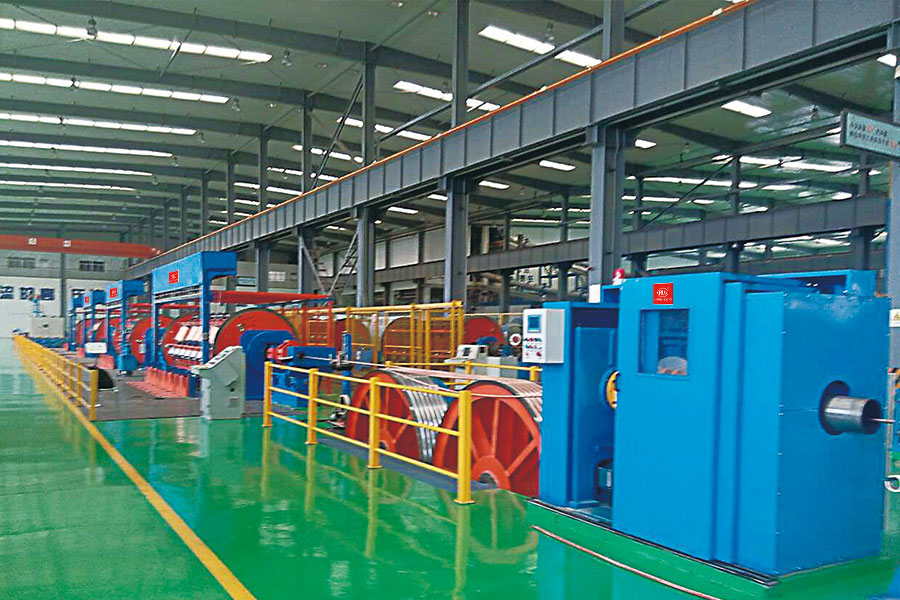
Unmatched Consistency and Efficiency
High-speed production does not hurt consistency. A wire stranding machine running fast keeps even wire shape and steady tension. This gives the same result for every meter. High-speed production helps factories meet tight deadlines.
Smart design allows nonstop work. The capstan and take-up reel do not need empty spools changed. Empty bobbins get wire from baskets. This design keeps production lines moving.
Precision stranding tech keeps a stable shape during nonstop running. Separate motor drives with advanced tension control give exact, steady tension during work. This ensures all products are the same and cuts down mistakes.
High-speed transmission and nonstop design raise efficiency. This cuts downtime and boosts output. Batch testing checks speed stability, tension evenness, stranding accuracy, and operating steadiness.
High-speed stranding is a key step for getting a stable core, even wire shape, flexibility, and reliable work in industry uses.
A wire stranding machine with good high-speed ability gives steady results. Low off-center stays during high-speed runs. Loose strands and off-center problems drop a lot. Large pay-off and take-up systems allow nonstop production. This tech pushes cable making forward. Engineers get stable operation and even cable shape.
The stranding process gets better from steady, nonstop work. Cable making becomes more predictable and efficient. Quality control is easier to keep. A wire stranding machine that mixes high speed with stability gives the best results. Makers get high-efficiency production.
Key Features of a Modern Wire Stranding Machine
Jiangsu Reliable Industry Co., Ltd. sells a full line of wire stranding machines. The lineup has Central Stranding Machine, Rigid Type Stranding Machine, Cage Type Stranding Machine, Bunching Machine, Tubular Type Stranding Machine, and Cantilever Type Active Take-up and Pay-off Stand Unit. Each machine type is made for certain jobs in wire production.
Automation and Smart Control Systems
Today's wire stranding machines use automation to keep output steady. PLCs run the whole stranding process. Operators type settings on a touch panel. The system sets lay length, tension control, and speed on its own. Servo-electronic lay length adjustment gives fine resolution. Recipe memory holds many programs. This cuts setup time compared to mechanical change gears. Changeover is fast. Exact control systems take away the need for manual judgment.
Tension is fully automated. Individual magnetic or pneumatic closed-loop systems check each bobbin. The system changes tension on its own as the bobbin empties. This stops loose strands and wire breakage. Inline laser micrometers measure strand diameter without stopping. The system marks non-conforming sections. IoT sensors give 24/7 condition monitoring. A high speed stranding machine with these features keeps quality at full output.
Machine Flexibility and Material Handling
Different conductor types need different machine designs. Tubular Type Stranding Machines have a rotating tube. They give high-speed production for smaller conductors and low-voltage lines. The design allows very little setup time. Rigid frame stranding machines run without back-twist. This wire stranding machine type makes compact and symmetrical designs. These machines handle medium and high-voltage conductors.
High-performance rigid-frame stranding machines from Jiangsu Reliable Industry use strong construction. Heavy steel cages hold multiple bobbin positions. Bobbins sit close to the rotation axis. Cages are CNC-machined and stress-relieved for rigidity. The drive system uses independent AC motors per cage. This removes ground shafts and gearboxes. The result is lower maintenance and higher efficiency. Rigid frame stranding machines are great at stranding power conductors.
Material handling works for both copper and aluminum wires. Pay-off and take-up tray sizing matches the conductor structure. Centralized loading cuts auxiliary time. Options include top lifting, side pushing, and ground-level tilting. Pneumatic tensioning sets air pressure by wire diameter. Wire break monitors spot problems right away. Cage braking systems stop the machine quickly for emergencies. Normal braking takes longer. This fast braking stops wire end damage.
The mix of smart automation and flexible handling makes modern wire stranding machines fit for diverse cable manufacturing settings. Each wire stranding machine from Jiangsu Reliable Industry is built for precision. The advanced technology stands up to demanding industrial conditions. This equipment boosts production efficiency and supports quality control throughout the cable manufacturing process.
Real-World Impact: Case Studies and ROI
Case Study: Enhancing Production Efficiency
A medium cable maker wanted to increase output but keep the same lay precision. The company swapped two old single-twist machines for one high speed stranding machine from Jiangsu Reliable Industry. The new machine ran faster and kept tension even on every bobbin. Output went up a lot in the first month.
The productivity gain of switching from single twist to double twist for 7-strand 1.5 mm² conductors is 85 to 110 percent, depending on bow balance and wire quality.
The factory saw a clear jump in efficiency. The wire stranding machine kept perfect lay at full speed. Workers no longer stopped the line to fix loose strands. The return on investment came from more output and lower labor cost per meter.
Case Study: Improving Cable Quality and Reducing Waste
A power cable maker often had defects in high-voltage conductors. The company changed to rigid frame stranding machines for the core stranding step. These machines run without back-twist and make a compact, symmetrical design. Defect rates dropped right away.
The wire stranding machine also lowered material waste. Fewer rejected meters meant less scrap copper and aluminum. The stranding process became easier to predict. The factory reported better quality control and steadier electrical performance. The wire stranding machine paid for itself with saved material and fewer rework hours.
Both cases show a common pattern. A wire stranding machine that mixes speed with precise tension control brings strong returns. The gains come from three things: higher efficiency, less waste, and better final product quality. Manufacturers who invest in the right wire stranding machine see payback in months, not years.
A high speed machine's worth is more than just spinning. The real worth comes from mixing speed, tension control, and automation. This mix creates a perfect lay. A perfect lay makes conductors stronger, more reliable, and better at their job.
A wire stranding machine with smart tension control systems makes sure every strand has equal tension. This precision boosts production efficiency and quality. A wire stranding machine that focuses on smart tension management gives better results over time. A wire stranding machine must handle complex conductor designs for renewable energy and EV uses. The fast growth in solar and wind projects calls for high-voltage conductors with very low losses during stranding. The future of cable manufacturing relies on this advanced method.
FAQ
What is lay length in a wire stranding machine?
Lay length is how far a strand moves to make one full twist around the conductor. The wire stranding machine controls this distance very exactly. A shorter lay length makes the cable bend more easily. A longer lay length makes it stronger when pulled. Exact control means every meter meets the same standard.
Why does tension control matter during stranding?
Even tension keeps every wire under the same load. Uneven tension causes strand crossover, changes in diameter, and stress inside. Modern systems use servo-driven tensioners with real-time feedback. This keeps tension changes within a small range. The result is a tight, even conductor with steady electrical performance.
How does high-speed production affect cable quality?
High-speed production does not hurt quality when the machine stays stable. A strong frame lowers shaking at high speeds. The capstan and take-up reel do not need empty spool changes. This keeps the process going without stops.
What types of wire stranding machines are available?
Jiangsu Reliable Industry Co., Ltd. offers several types. These include Central, Rigid Type, Cage Type, Bunching, and Tubular Type Stranding Machines. Tubular machines work well for smaller cables. Rigid frame machines handle high-strength power lines. Each wire stranding machine is built for precision and reliability in tough settings.
How does automation improve the stranding process?
PLCs run the whole process on their own. Operators set lay length, tension, and speed on a touch panel. Servo-electronic adjustment gives fine resolution. Recipe memory cuts setup time by a lot. Inline laser micrometers measure strand diameter without stopping. IoT sensors give constant condition monitoring. This automation cuts human error and keeps quality steady.


I want to comment


Recent News
1.RLB stranding machine secrets to flawless conductors and faster runs
2026-08-202.TOP 10 Tubular type stranding machine manufacturers in China
2026-07-203.RELIABLE High Quality Rigid Stranding Machines Up to 127 Wires
2023-05-224.What are the characteristics of the stranding machine?
2021-08-125.Full-automatic dual-twisting stranding machine
2021-02-266.Reliable Tubular Type Stranding Machine
2020-05-157.Where is the wide application of stranding machine reflected
2019-12-278.High Rotating Speed 630/1+6 Tubular Stranding Machine
2024-07-25





View More(Total0)Comment lists