 E-mail: sales1@rlbcable.com
 English
 العربية
 Le français





How to Choose the Right Cable Bunching + Extrusion Combination for Building Wire, Power Cable, and EV Wire
 Nov 12, 2026|
 View:5
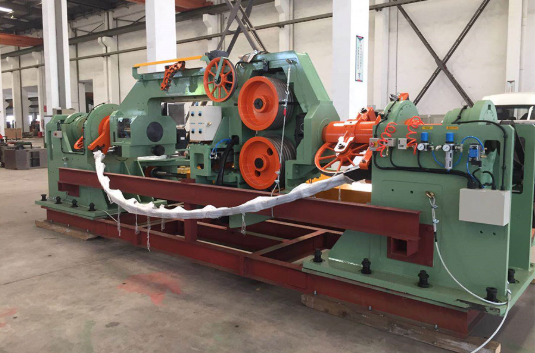
Learning how to choose the right cable bunching + extrusion combination starts with three criteria: application requirements, regulatory standards, and cost. Bunching controls flexibility and conductor geometry. Extrusion forms the insulation and sets dimensional consistency.
Start with flexibility needs, current draw, and the operating environment. These practical factors point you toward the right setup for building wire, power distribution, or EV charging lines. Voltage class, electrical load, and performance targets narrow the field further. Every choice in wire and cable manufacturing carries cost trade-offs. The comparison below places all three side by side, so you can map each criterion to your own product.
Key Takeaways
Begin with three things to consider: what the job needs, the rules you must follow, and the cost.
Building wire uses medium bunching and standard plastic insulation for fixed installation.
Power cable needs tight bundles and insulation rated for voltage, plus a jacket for durability.
EV wire needs thin strands and strong, heat-resistant materials so it stays flexible and can handle high heat.
Match the bunching and extrusion settings to each cable type's specific job for the best results.
Building Wire: Bunching + Extrusion for Fixed Installation
Technical Demands of Building Wire
Building wire carries power through fixed wiring for lighting, receptacles, and distribution circuits. Standards such as UL 44, UL 83, and NEC requirements govern this product family. You install it once and leave it in place for decades, so reliability matters more than flex life.
The first demand is conductor flexibility for pulling through conduit. A stiff conductor resists bends and strains terminations. The second demand is current-carrying capacity at the expected load. The third is the installation environment, including ambient temperature and moisture exposure. UL publishes a guide for determining the suitability of UL Certified, Listed, Classified, and Verified wire and cable for a specific installation. Check that guide before you lock a design.
Bunching, Extrusion, Compliance, and Cost
For fixed installation, choose a moderate bunching pitch and a standard wire diameter. A tighter pitch adds flexibility for conduit pulls. Keep the wire count matched to the circuit ampacity. Copper and aluminum building wire both work here, and copper remains the common choice for smaller branch circuits.
On the extrusion side, select a thermoplastic electrical insulation compound with a wall thickness that meets the applicable UL 83 or UL 44 table. A stable extrusion process holds diameter tolerance and prevents thin spots. Thin walls weaken performance and invite failures in commercial wiring.
Compliance drives the material and test plan. NEC-compliant products must pass the relevant UL tests before shipment. Cost trade-offs appear in pitch tightness, insulation grade, and line speed. A standard combination fits most fixed-installation work well. Reach for tighter bunching only when conduit runs demand extra flexibility. Your wire and cable manufacturing line should hold consistent tension and temperature to keep results repeatable.
Power Cable: Conductivity, Insulation, and Durability
Technical Demands of Power Cable
Power cable carries electricity through transmission and distribution networks in industrial, commercial, and utility settings. Low- and medium-voltage power cables handle heavy loads over long runs, so the design must last under constant use. You need current-carrying capacity that matches the load without too much heat. Insulation thickness must handle the voltage stress for the life of the circuit. Durability covers physical damage, moisture, and temperature changes at the installation site.
Conductor sizing affects everything else. Copper and aluminum conductors both work here, and each has its own conductivity and weight. For layer-on-layer constructions, you can estimate the cabled bundle diameter by multiplying the wire diameter by a factor from cable design tables. That estimate helps you pick extrusion tooling and reels before production starts.
Bunching, Extrusion, Compliance, and Cost
Pick a bunching pitch that balances conductor roundness with easy handling. A moderate pitch keeps the bundle compact for the extrusion die. Match wire count and diameter to the ampacity target. For extrusion, choose an electrical insulation compound rated for the cable's voltage class, then add a jacket compound for physical and moisture protection. Wall thickness follows the standard for the voltage rating. A steady extrusion process keeps concentricity tight, and concentricity protects electrical insulation applications from stress concentration.
Compliance means meeting the right product standard and the extruded dielectric power cable installation guidance for your market. Test the finished cable before release. Cost trade-offs are in insulation grade, jacket material, and line speed. Thicker walls and premium compounds cost more, so specify only what the duty cycle requires. Careful wire and cable manufacturing practice keeps scrap low and reliability high across the run.
EV Wire: Flexibility, Thermal Endurance, and Abrasion Resistance
Technical Demands of EV Wire
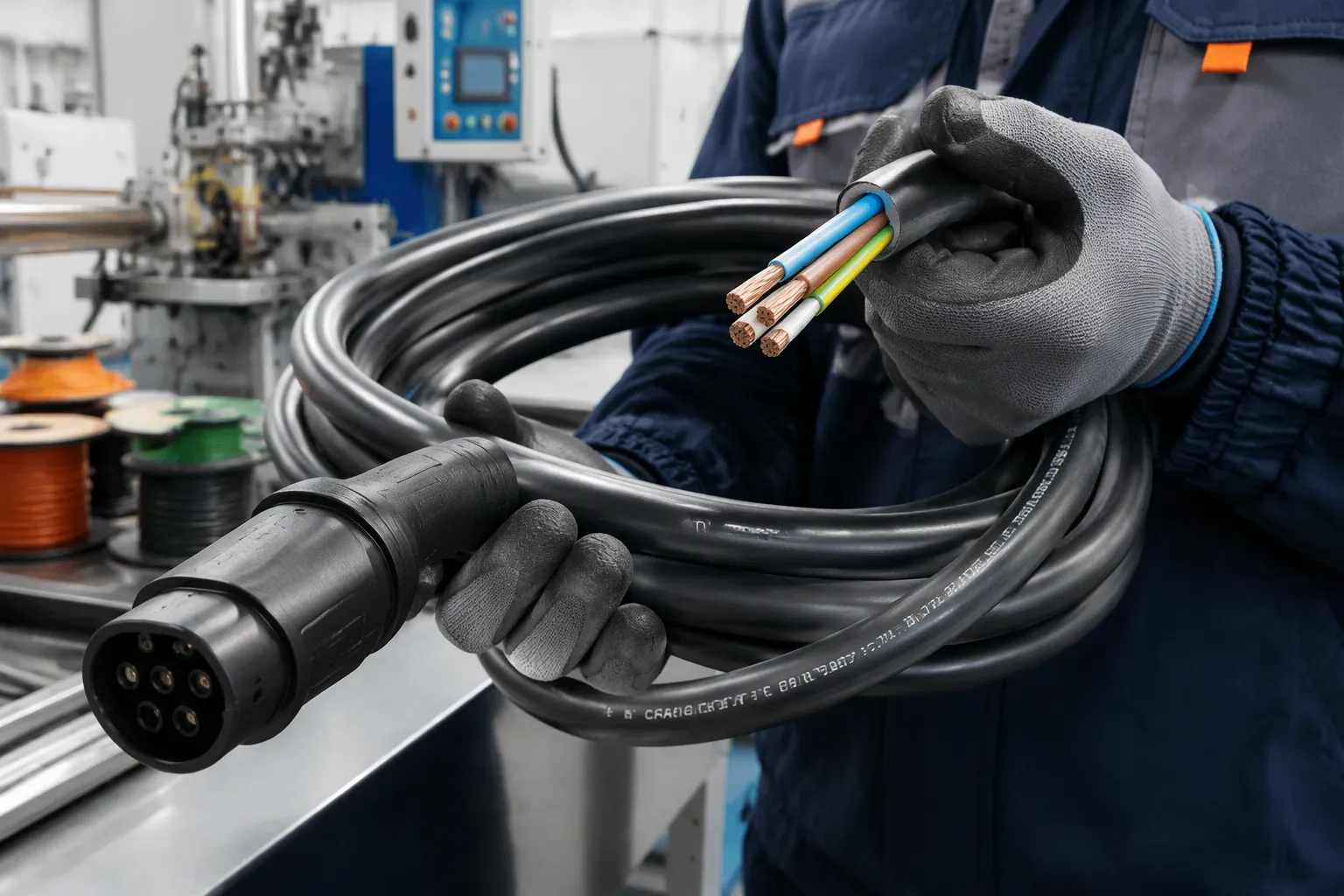
EV wire is used in EV charging stations and in the wiring inside electric vehicles. Charging cables bend and drag across the ground every day. Wiring inside the car shakes all the time and sits close to heat sources. These conditions call for high flexibility, thermal endurance, and resistance to abrasion and fluids.
Bundled wire bends more easily than solid copper, wears out less from metal fatigue, and gives off heat quickly. That mix works well for the repeated flexing of a charging cable and the tight routing inside a vehicle. Thermal rating matters too, since charging sessions make heat in the conductor. The operating environment adds abrasion, road chemicals, and moisture to the list. Copper stranding for Class 2 conductors affects how flexible and how well the conductor performs, so the strand pattern deserves attention early in the design.
Bunching, Extrusion, Compliance, and Cost
For EV wire, pick a finer wire diameter and a higher wire count. Finer strands bend more easily and resist fatigue under repeated motion. Tune the pitch to balance flexibility against bundle stability. A pitch that is too loose lets strands separate during flexing.
On the extrusion side, choose an electrical insulation compound with strong thermal endurance and abrasion resistance. Add a jacket where the cable gets rough handling. Keep wall thickness consistent, because thin spots invite wear failures. A stable extrusion process protects performance across the full length of the cable.
Compliance depends on the standard for your market and the specific EV infrastructure application. Check the finished wire against the relevant test requirements before release. Cost trade-offs sit in strand count, compound grade, and line speed. Finer strands and premium compounds raise cost, so match the specification to the actual flex and thermal duty. Careful wire and cable manufacturing keeps scrap low and quality repeatable.
How to Choose the Right Cable Bunching + Extrusion Combination
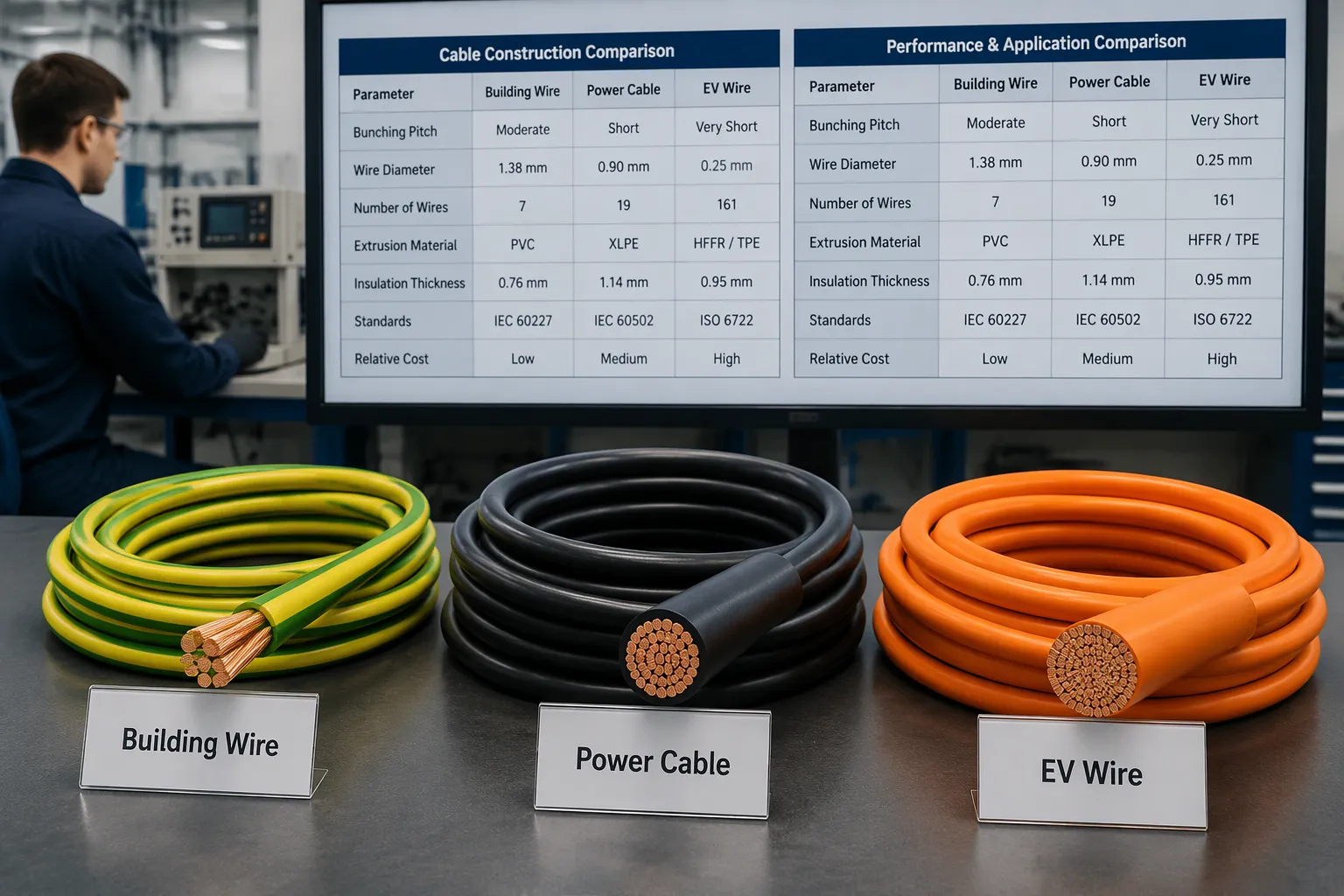
This section is your decision hub. You now know how application requirements, regulatory standards, and cost map to each cable type. Building wire works best with moderate bunching and standard thermoplastic insulation. Power cable works best with compact bundles and voltage-rated insulation plus a jacket. EV wire works best with fine strands and tough, heat-resistant compounds. The two tables below put the parameters side by side, so you can see how to choose the right cable bunching + extrusion combination for your own product line.
Comparison Table: Bunching Parameters by Cable Type
Use this table to compare conductor-side settings. Treat the entries as starting points, then confirm them against your product standard and your pulling or flex duty.
Cable type | Bunching pitch | Wire diameter | Number of wires |
|---|---|---|---|
Building wire | Moderate; tighten only for conduit pulls | Standard | Matched to circuit ampacity |
Power cable | Moderate; keeps bundle round for the die | Sized to ampacity target | Sized to ampacity target |
EV wire | Tuned for flex; avoid loose pitch | Fine | High |
For layer-on-layer power cable constructions, estimate the cabled bundle diameter by multiplying the wire diameter by a factor from cable design tables. That estimate guides your tooling choice before production starts.
Comparison Table: Extrusion, Compliance, and Cost by Cable Type
This table covers the extrusion side, the standards to verify, and the relative cost position of each combination.
Cable type | Extrusion material | Insulation thickness | Key standards | Relative cost |
|---|---|---|---|---|
Building wire | Thermoplastic electrical insulation compound | Per UL 83 or UL 44 table | UL 44, UL 83, NEC | Standard |
Power cable | Voltage-rated insulation plus jacket compound | Per voltage class | Product standard plus installation guidance | Higher |
EV wire | Thermal-endurance, abrasion-resistant compound | Consistent wall, no thin spots | Market-specific EV standard | Higher |
No single combination fits all three cable types. Each one fits its own duty best, and none is inferior. Building wire rewards a standard, cost-efficient setup. Power cable rewards insulation integrity. EV wire rewards flex life and thermal headroom.
Execution matters as much as specification. Bunching (stranding or laying up) and extruding equipment choices in wire and cable manufacturing decide how well you can hold pitch, tension, and wall tolerance. Good wire processing equipment and cable production equipment turn a sound specification into repeatable output. Enhancing wire and cable production starts with stable line settings, and coating and extruding cable with tight process control protects every foot you ship. A copper conductor with the right strand pattern also pays off in flex life. When standard combinations fall short, ask your supplier for customized solutions built around your application.
You can make the decision in four steps:
Figure out what your application needs: flexibility, current draw, and where it will be used.
Match those needs to bunching and extrusion settings.
Check that you meet the rules of the right standard.
Confirm your cost targets last.
Now you know how to choose the right cable bunching + extrusion combination for each product family. No single setup works equally well for building wire, power cable, and EV wire. The right choice always depends on your specific application. When standard combinations fall short, ask a supplier about customized solutions. A partner with deep wire and cable manufacturing experience can tailor each line to your product.
FAQ
Does a tighter bunching pitch always improve performance?
No. A tighter pitch adds flexibility, which helps with conduit pulls and repeated flexing. It also slows the line and raises cost. Match the pitch to the actual duty. Fixed installation rarely needs the tightest pitch, while EV wire benefits from a tuned, stable pitch.
Can one bunching and extrusion setup serve all three product families?
Rarely. Building wire works best with a standard, cost-efficient setup. Power cable needs voltage-rated insulation and a jacket. EV wire needs fine strands and tough compounds. Each combination fits its own duty best. Ask your supplier about customized solutions when standard setups fall short.
How do I estimate bundle diameter before production?
For layer-on-layer constructions, multiply the wire diameter by a factor from cable design tables. That estimate guides extrusion tooling and reel selection. Confirm the result against your product standard before you commit to a line setup.
Which standards should I verify for each product type?
Building wire follows UL 44, UL 83, and NEC requirements. Power cable follows its product standard plus extruded dielectric installation guidance. EV wire follows the standard for your market. Always test the finished cable against the relevant requirements before release.
Why does bundled wire suit flexing applications?
Bundled wire bends more easily than solid copper. It resists metal fatigue under repeated motion and gives off heat quickly. Those traits suit charging cables and tight vehicle routing. Copper stranding for Class 2 conductors shapes that flexibility, so choose the strand pattern early.





View More(Total0)Comment lists