 E-mail: sales1@rlbcable.com
 English
 العربية
 Le français





Compliance Questions Every Cable Extrusion Machine Buyer Should Ask about CE, ISO 9001 and PLC Control
 Nov 21, 2026|
 View:4
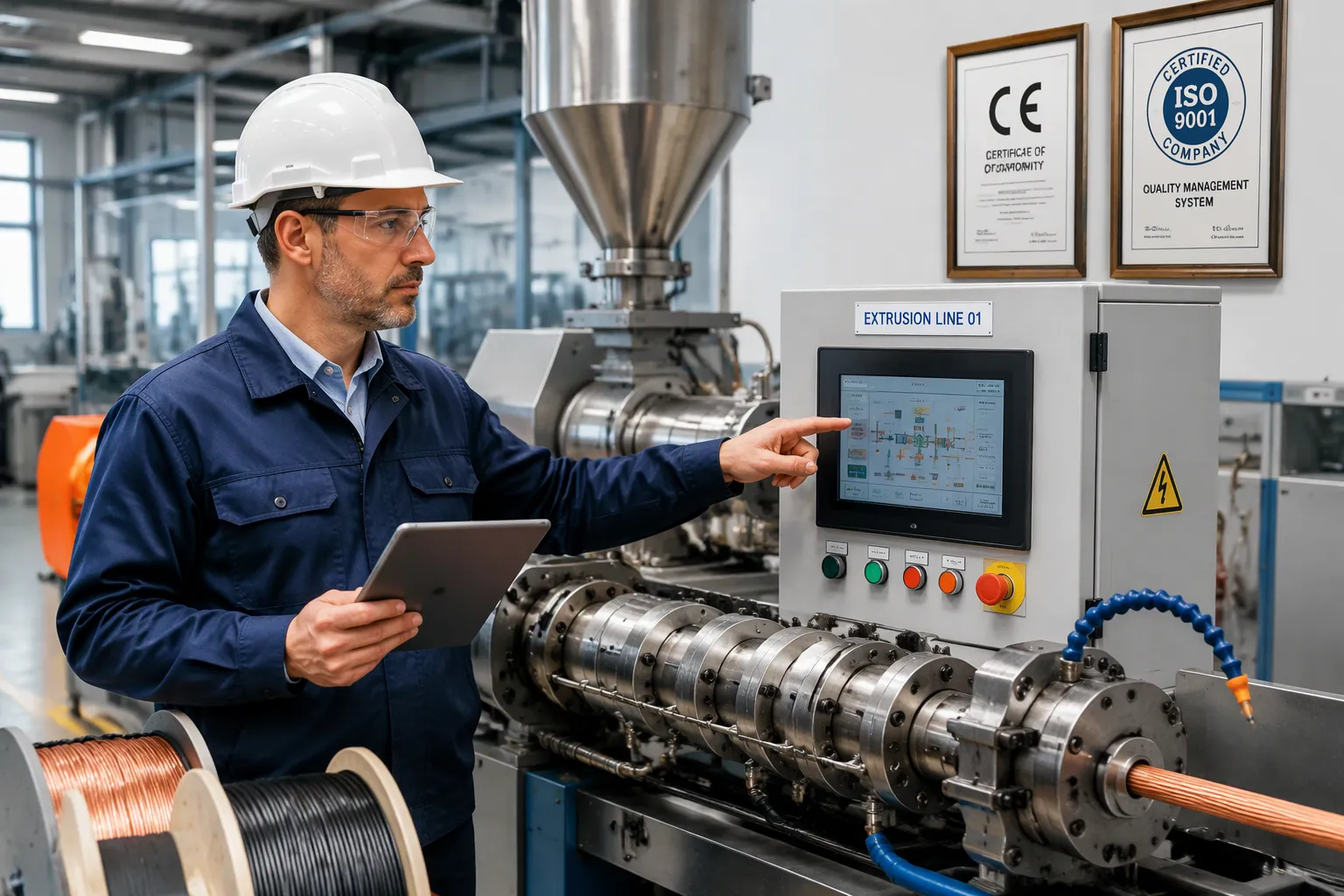
Before you sign a purchase order cable extrusion machine, settle five points: what CE evidence the supplier will hand over, whether the ISO 9001 certificate covers this cable extrusion machine, how the PLC handles safety interlocks, how program changes get documented, and which standards apply to your target market. These are the compliance questions every cable extrusion machine buyer should ask.
Treat the CE mark, the ISO 9001 certificate, and the PLC control system as one connected check. A gap in any of them weakens the other two. In electric cable and wire manufacturing, that gap can cost you uptime and safety.
You will find specific, askable questions below. Take them straight to your supplier.
Key Takeaways
Always ask for CE documents, such as the declaration of conformity and the technical file. Check that they match your machine model.
Make sure the ISO 9001 certificate is up to date and covers your exact machine. Do not accept a general certificate.
Find out if the PLC is part of the certified safety system. Ask how program changes are written down and approved.
Ask for testing records for output and tolerance. These records show the machine meets your production needs.
Keep all compliance documents in one file. This file protects your uptime and safety in cable manufacturing.
Compliance Questions Every Cable Extrusion Machine Buyer Should Ask
Why Verification Beats Assumption
A fancy brochure proves nothing. A spoken promise proves even less. You need a compliance file you can check and show to your own customers.
Labels make people assume things. A CE sticker on a control cabinet feels safe. But the sticker says nothing about which standards the builder used or whether the technical file is complete for your market. The same idea applies to an iso certification hanging in a sales office. It may be current, or it may have expired two years ago. A certificate without a scope statement tells you almost nothing about the machine on your floor.
Reviewing documents replaces guessing with evidence. Ask for the file, read the scope, and check the dates. This habit protects you in electric cable and wire manufacturing, where one nonconforming line can delay the wire you ship for weeks. Weak paperwork shows up later as batch-to-batch variation and misread specifications.
The Three Pillars at a Glance
The rest of this post works through three connected checks. First, the CE mark: what it covers and which CE certificates to request. Second, ISO 9001 and related iso certifications: what the certificate signals about the builder's quality system. Third, PLC control: how the controller supports safety interlocks and how program changes get recorded.
Each pillar supports the others. A strong controller architecture means little without a certified safety design behind it. A quality system means little without type testing records that trace to your specific machine and the cables it produces.
Treat these as a script for your next supplier conversation. Reputable builders expect them. RLB, established in 2003 in Changzhou with more than 20 years in extrusion production lines, provides documentation on request — a useful benchmark when you compare responses. In electric cable and wire manufacturing, verified paperwork protects uptime and safety. Ask the compliance questions every cable extrusion machine buyer should ask, and insist on written answers before you commit.
CE Compliance: What Buyers Must Verify
What CE Marking Covers
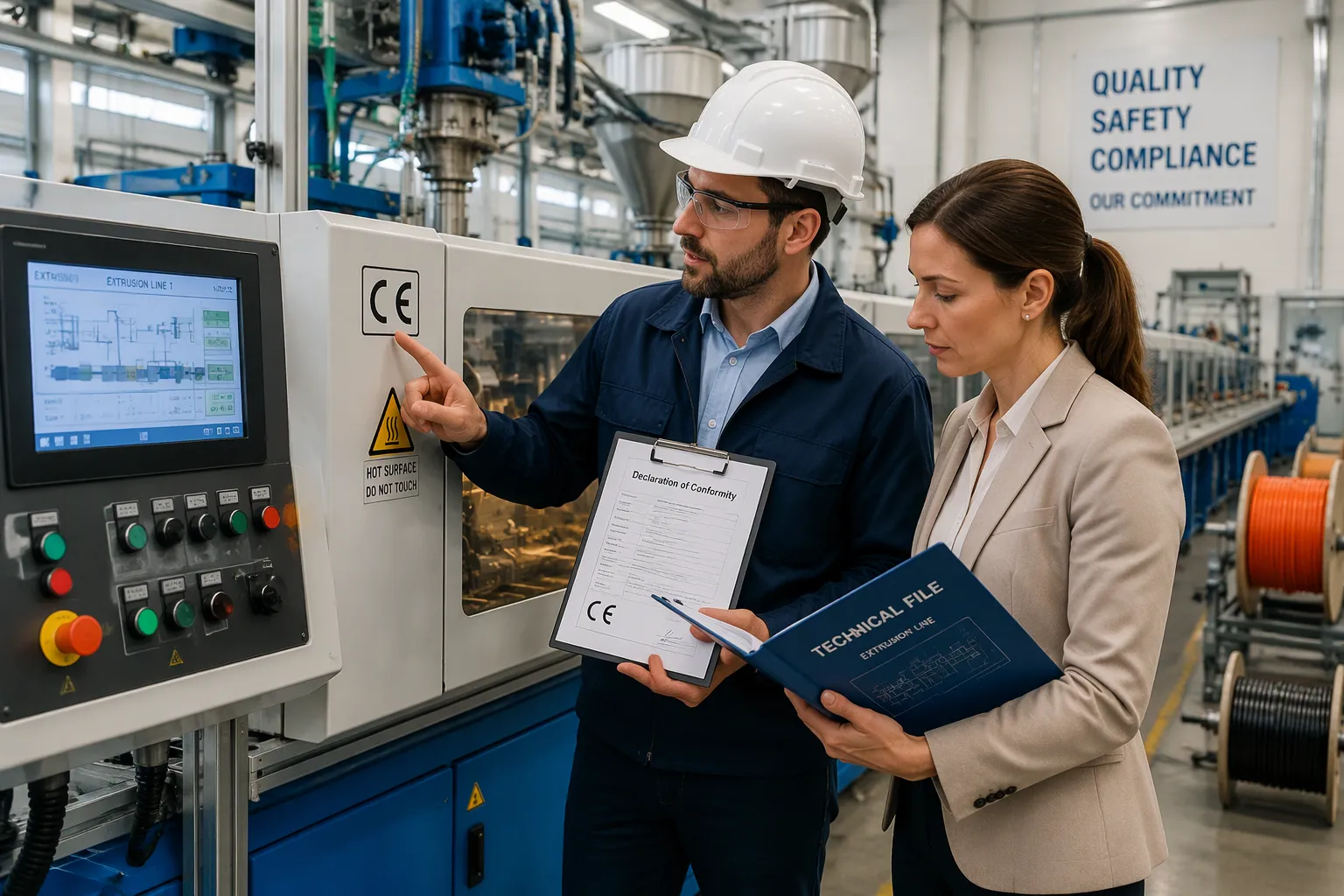
A CE label on the machine frame does not prove the machine is compliant. The label is only a claim. The proof behind it is what keeps you safe. CE marking shows that the machine meets the European health, safety, and environmental rules for your market. It does not show that the builder tested every function you care about. It also does not carry over to other regions on its own.
Ask your supplier which directives and harmonized standards apply to the extrusion line you are buying. Ask for the conformity evidence that backs up the label. A supplier who answers in general terms has not really answered. In electric cable and wire manufacturing, a machine that fails a conformity check at your site can hold up the wire you promised to ship.
CE Documents to Request
Ask for the full document set in writing before you sign. Three items matter most:
The declaration of conformity, signed and dated, naming your machine model and the standards referenced.
The technical file or the test reports behind it, including electrical safety and performance testing results.
A list of the applicable standards, so your own engineers can check the scope against your market.
Read the declaration closely. Make sure the model number matches your order. Check that the standards listed cover extrusion lines, not just auxiliary equipment. Ask whether the ce certificates on file are current. Expired paperwork is common, and it puts the risk on you.
Now think about the PLC question. Does a program change affect CE certification? The answer depends on the controller's role. If the PLC is part of the certified safety system, any change to its logic can change the certified setup. You then need a documented re-assessment. If the PLC only handles production settings outside the safety chain, a change is usually just a maintenance matter. Ask your supplier to say clearly which case applies. Get that answer in writing, and keep it with your compliance file. This one question shows the difference between a well-documented builder and one who makes things up. The same care applies to certifications you accept from any vendor.
ISO Certifications and Quality Management Systems
What ISO 9001 Really Signals
ISO 9001 is the most widely known quality certification in the world. It shows that a supplier has a written system for meeting legal and regulatory requirements. That matters when you buy an extrusion line for electric cable and wire manufacturing. Still, treat it as a basic step for checking a supplier, not the final goal.
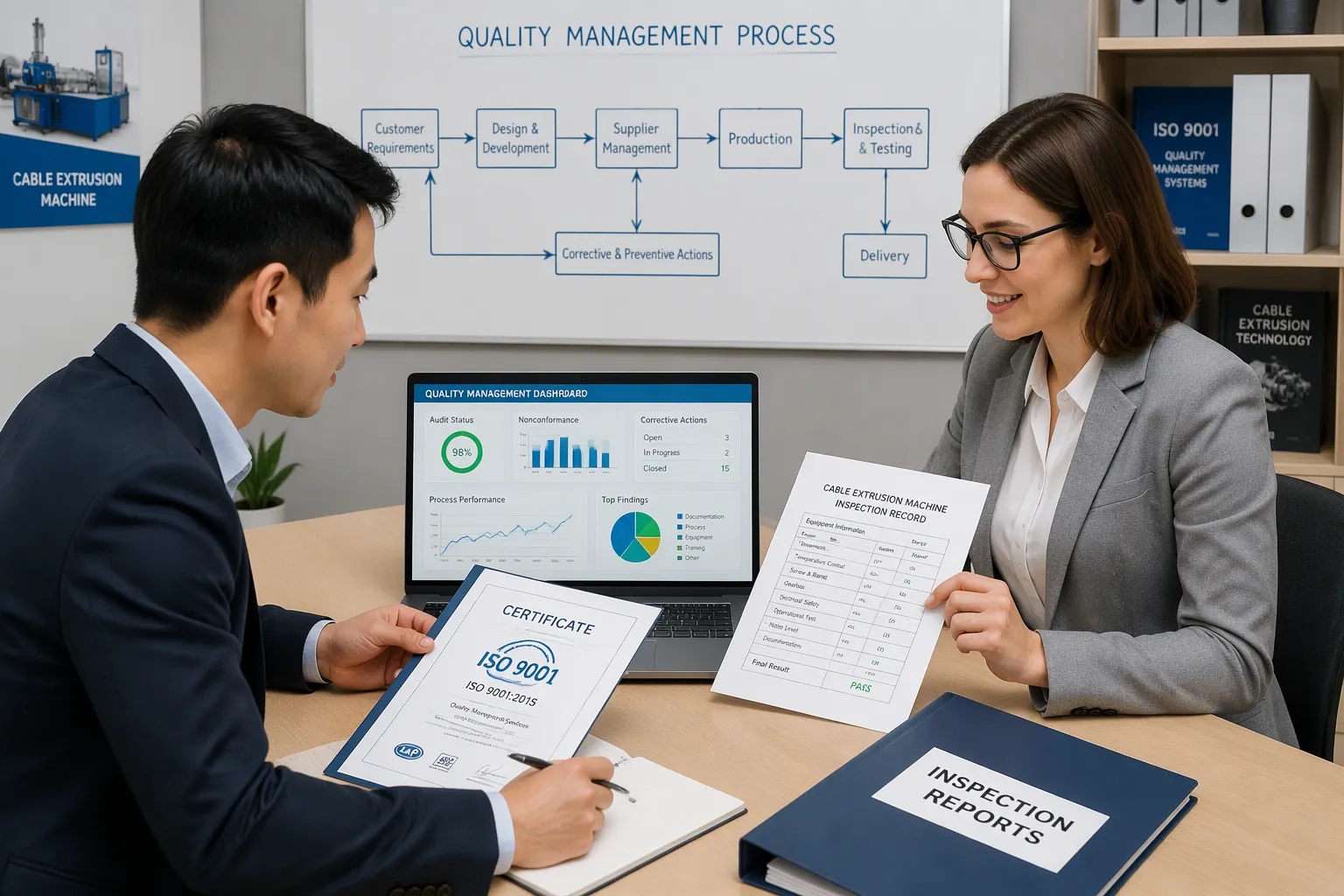
The certificate tells you the builder has a process. It does not tell you the process made your machine correctly. You still need to confirm two things. First, check that the certificate is current. Look at the expiry date and the issuing body. Second, confirm the scope covers the exact machine you are buying. A certificate for trading activities says little about an extrusion line. Ask for the scope statement in writing and match it to your order.
An internationally recognized ISO certification also shows that the builder goes through independent certification audits. Those audits check the system, not your machine. Use them as a starting point for your own review.
Questions on Quality Management Records
Strong quality management systems leave a paper trail. Weak ones leave gaps. Those gaps often show up as batch-to-batch variation and miscommunicated technical requirements. Ask these questions before you commit:
Can you share quality inspection records for machines like mine?
Which test reports cover the extrusion line, and what did the testing include?
What is your procedure for handling nonconforming products?
How do you record and close customer complaints?
Ask for verified ISO 9001 and CE certificates together, and check both against your order. A supplier with mature quality management answers these questions without delay. RLB, with more than 20 years in extrusion production lines, provides such records on request, which makes it a useful benchmark.
Now widen the view. ISO certifications cover more than quality alone. Some builders also hold certifications for quality, safety, and environmental requirements. Ask which ISO certifications apply to the site that will build your machine. Confirm that certification audits happen on a regular schedule, and ask when the last one took place. Independent certification audits add credibility, but only when the scope matches your purchase.
Keep one habit. Store every certificate, scope statement, and audit summary in your compliance file. In electric cable and wire manufacturing, that file protects you when a customer asks how you qualified your supplier. It also protects your wire output when a dispute arises. Certifications are evidence, and evidence belongs in writing.
PLC Control: Reliability and Safety Interlocks
How PLC Control Supports Compliance
The PLC control system runs the extrusion line. It keeps temperature, screw speed, and line speed steady. It also connects the safety interlocks that stop the machine when a guard opens or a drive faults. A steady controller protects your wire quality and your operators at the same time.
This is where the PLC connects back to CE compliance. A certified machine depends on specific safety logic. The PLC control system carries part of that logic. You should know which part. Ask your supplier to mark the safety functions on the wiring diagram. Then you can see how the controller supports the ce conformity claim.
Questions on PLC Architecture
Ask these questions before you approve the design:
Is the plc part of the certified safety system, or does it only handle production settings?
How do you document program changes, and who signs off on them?
Will the line meet the contracted output and tolerance targets, and which testing proves it?
Different setups fit different needs. A standard PLC works for a line with stable recipes and few changeovers. A higher-tier controller with backup safety modules fits plants that run many cable sizes and need fast changeovers. Neither option is wrong. Match the setup to your production plan.
Ask for factory acceptance testing results on output and tolerance. Request the program change log format. In electric cable and wire manufacturing, a clear record protects your cables and your certification file. RLB, with more than 20 years in extrusion production lines, supplies such records on request. Keep every answer in your compliance file. Verified safety logic protects your wire output, your people, and your total cost of ownership.
Put these answers in writing:
Which CE certificates and declaration of conformity come with the machine?
Does the ISO 9001 scope cover this model, and does each ISO certification stay current?
Is the PLC part of the certified safety system, and which testing records prove output and tolerance?
Verified compliance protects uptime, operator wellbeing, and total cost of ownership. A file proves you did your due diligence in electric cable and wire manufacturing.
Confirm each answer before you buy. Keep the compliance documents with your order. That habit keeps your output on schedule in electric cable and wire manufacturing, and it answers the compliance questions every cable extrusion machine buyer should ask.
FAQ
Which document should you request first from a supplier?
Start with the declaration of conformity. It names your machine model and the standards behind the CE mark. Then ask for the technical file and the ISO 9001 scope statement. These three documents answer most of the compliance questions every cable extrusion machine buyer should ask before signing.
How do you confirm a certificate is still valid?
Check the expiry date and the issuing body. Make sure the scope covers your exact machine model. Ask when the last audit took place. Current iso certifications carry real weight. Expired paperwork shifts the risk to you, so verify every document in writing.
Does a PLC program change void the CE mark?
It depends on the controller's role. If the PLC carries certified safety logic, a program change needs a documented re-assessment. If it only handles production settings, the change is usually routine maintenance. Ask your supplier to state which case applies to your line.
How do you apply these checks to a cable lug making machine configuration?
Use the same document set. Request the declaration of conformity, the technical file, and the quality records for that cable lug making machine configuration. Confirm the PLC safety role and the program change log. A second cable lug making machine configuration deserves the same scrutiny as your extrusion line.
Which testing records prove the line meets its contracted output?
Ask for factory acceptance testing results on output and tolerance targets. Request the program change log format and the safety interlock verification records. Solid testing records protect your wire quality and your compliance file in electric cable and wire manufacturing.





View More(Total0)Comment lists